






- The problem: Most buffet food waste is overproduction that never reaches a guest's plate. Teams manage waste by feel, not by data, so the same patterns repeat every shift.
- The fix: Automatic, ingredient-level capture lets you fine-tune replenishment quantities and serve smaller portions without reducing variety or altering guest-facing portions.
- The result: Kitchens using measured data report up to 70% waste reduction and ROI within 4 to 8 months, with no impact on guest perception.
- Portfolio scale: Properties including Fairmont and Hyatt use Orbisk across multiple sites, with built-in cross-property benchmarking and audit-ready CSRD reporting.
Orbisk is the food waste intelligence platform built for hotel and catering operators who need to stop guessing at buffet production and start cutting buffet food waste with measured, ingredient-level data, without disrupting service or guest experience.
Buffet food waste is one of the most stubborn cost problems in the hospitality industry, and it shows up in hotels and resorts around the world for the same reason: most kitchens are still running on instinct.
The production plan gets set by experience and habit. Replenishment decisions get made by eye. Because there's no consistent, timely data flowing back from each service and each location, the same overproduction patterns repeat week after week.
The deeper problem is what keeps operators from acting. Most F&B directors know that the breakfast buffet, lunch spread, or dinner service generates waste. What stops them isn't indifference; it's fear that guests will notice, and that many guests equate a full display with getting their money's worth. Reduce the offering, and you risk looking thin. Pull back production, and a half-empty chafing dish becomes a guest complaint. When you can't measure the gap between what you put out and what actually gets eaten, the safe choice is always more.
That calculus changes when you have ingredient-level data. Hotels that track exactly what's being discarded, by ingredient, by meal period, by location, can fine-tune replenishment and right-size production without reducing the perceived abundance guests expect, and without cutting the buffet altogether. That matters most at resorts where the spread is part of a luxurious experience guests are paying for. Fresher food, timed to actual demand, often improves the hotel experience rather than diminishing it: the display looks full because it's being topped up precisely, not because it was overstocked from the start. By the time guests check out, what they remember is the spread in front of them, not what happened behind it.
This article shows how hotels and resorts are using measured waste data to significantly reduce buffet food waste, without affecting guest satisfaction scores.
Why buffet food waste stays high
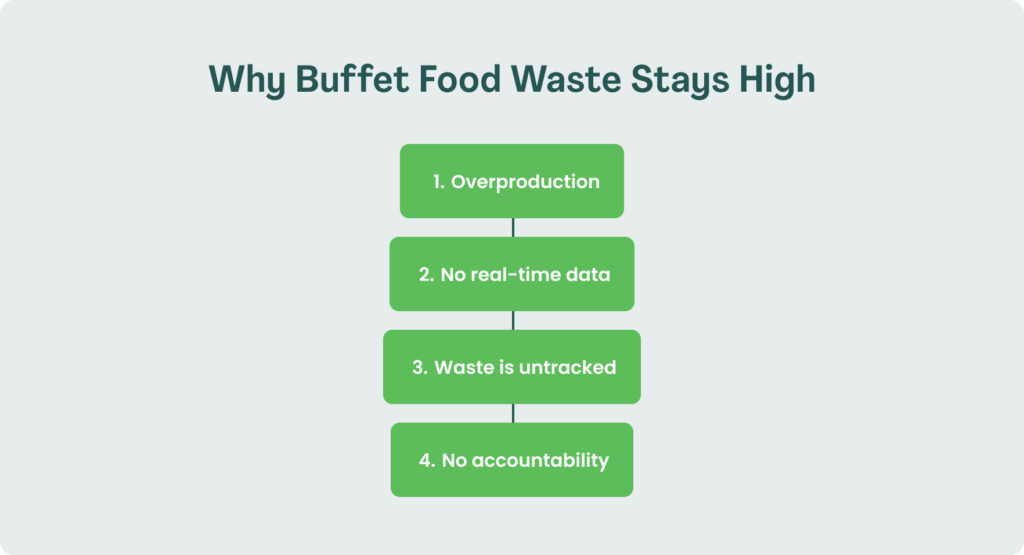
Buffets are notoriously wasteful by nature: unlimited access to food and a room full of hungry guests naturally produces a huge amount more than gets eaten. Overproduction is the single biggest lever in this equation, and the hardest one to pull without data. Food gets prepped, cooked, and displayed in quantities driven by instinct and habit. Guests never see what gets cleared away at the end of service; your team does, but without a record that means anything.
The result is a familiar cycle. Chefs and F&B leaders make daily prep and purchasing calls based on yesterday's feel, last week's rough numbers, or a report that arrived too late to act on. There is no usable ground truth for today's service, so the same stations overproduce, the same ingredients pile up in the bin, and the pattern repeats.
Manual logging is supposed to fix this. In practice, it consumes hours of staff time and still misses the detail that matters. Teams can record that waste occurred, not which ingredient, which station, which service stage, or how much it weighed. That gap makes it impossible to explain food cost ratios or benchmark buffet performance across sites.
Food waste in buffets is particularly damaging precisely because it is invisible in the numbers. When you cannot attribute a cost increase to a specific item or moment in service, it becomes an unexplained variance: food cost creeps up, leadership asks why, and no one has a clear answer.
The same problem compounds in reporting. ESG and audit submissions that rely on estimated waste figures, broad categories, manual tallies, or end-of-week guesses do not hold up to scrutiny. Without ingredient-level, weight-based measurement, you are not reporting what actually happened; you are reporting what you think probably happened. That is not a position any F&B director or sustainability lead wants to be in, especially as ESG regulations across the food sector continue to tighten.
The measurement gap that keeps buffet waste high
Generic waste tracking tells you how much went in the bin. Not what, not when, not which stage of service it came from.
That's the measurement gap that keeps buffet food waste stubbornly high across hotel and catering operations. Most waste management systems log discards in broad categories, "protein," "salad," "hot food," with no ingredient detail and no link to the service stage where the loss actually happened. You end up with a number, not an answer.
Without ingredient-level data, you can't tell whether the problem is overproduction before service, spoilage from poor storage, or guest plate waste at the end of a sitting. Each has a different fix. Lumping them together means you're solving for the average, not the cause.
The typical response is blanket portion control across the board, cutting volumes and hoping the numbers improve. The risk is real: tighten too hard on certain items and guest satisfaction takes the hit, while the actual waste driver, say, 3kg of salmon overproduced every Friday lunch, goes untouched.
A significant share of overproduction stems from decisions made without data: how much to produce, when to replenish, and what to carry over. Precise, ingredient-level measurement closes that gap directly. You reduce what's genuinely excess, not what looks like it might be.
How ingredient-level waste data changes buffet operations

Most food waste tools give you a number: a weight at the end of service, a category on a spreadsheet, a broad estimate that tells you something went wrong but not what, or where, or why. That's not intelligence; that's a receipt. Comparing food waste solutions side by side usually turns up the same gap: most only measure at the bin, once everything has already mixed together.
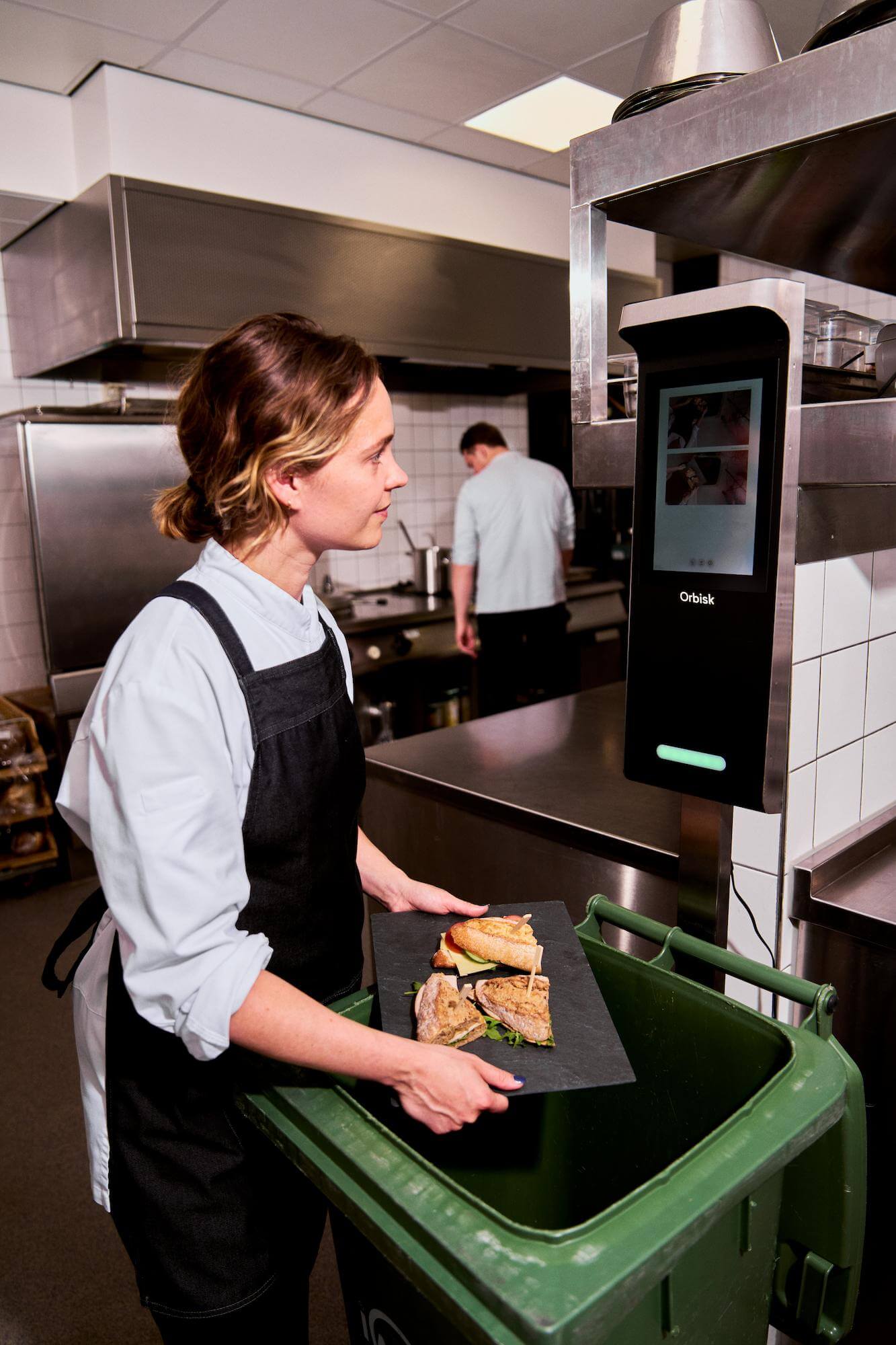
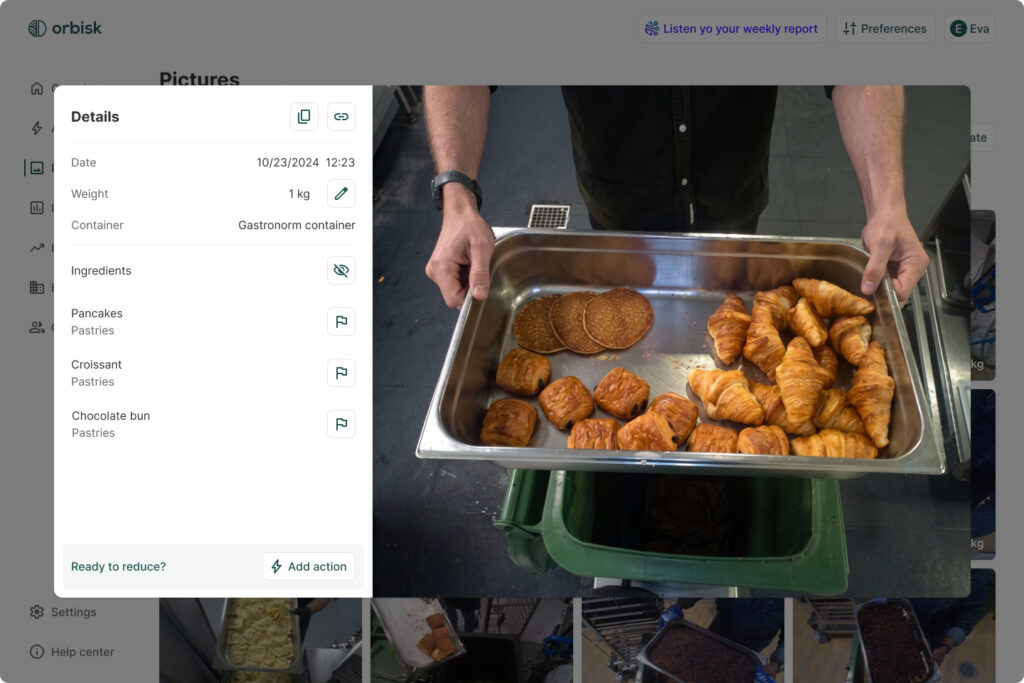
The difference with Orbisk is structural. The Orbi sits above the bin and captures each discard before anything mixes: ingredient name, weight, waste stream, and container type, all recorded in the background while your team works. The AI identifies 800+ ingredients at ~90% accuracy under real kitchen conditions, distinguishing 1kg of salmon from 400g of food scraps rather than logging "300g mixed waste." That above-bin position is what makes the accuracy possible; once items mix, the data collapses into broad estimates.

For buffet operations specifically, that precision changes what you can actually fix. The dashboard delivers ingredient-level data grouped by service stage: prep, production, plate waste, so you're not making blanket portion cuts across the board. You're targeting the right stage with the right intervention. Overproduction of hot dishes at dinner? That's a production volume call. Guest plate waste on salads at lunch? That's a portion or presentation question. The data tells you which is which.
A real photo of every discard gives you a clear picture of what's happening across every kitchen, by ingredient, waste stream, and serving stage. That photo record removes disputes. Chefs and management are working from the same evidence, not memory, not estimates, not competing versions of what happened during service.
From there, the Action Centre (a command centre for setting actions, monitoring progress, and reporting on results) suggests focused actions and their expected impact so managers can choose quick wins first. For buffet waste, that means knowing whether to adjust late-service replenishment volumes, rotate under-consumed items off the menu, or tighten morning batch sizes, ranked by the savings each change will deliver.
Not guesswork ranked by gut feel. Facts ranked by impact.
See how Orbisk captures buffet waste in real kitchens. Book a demo.
How to prevent food waste in buffets without hurting guest perception
The biggest fear with cutting buffet quantities is a guest complaint. In practice, that fear is based on guesswork, not data. When you know exactly what's being thrown away, by ingredient and by service stage, you can make precise adjustments that guests simply don't notice.
That's how to reduce food waste at buffets without affecting the guest experience: focus on what happens behind the display, not in front of it.
Kitchen teams using Orbisk data replenish based on historical demand and cover counts rather than overstocking from the start of service. The mechanism is straightforward. Ingredient-level waste data, broken down by meal period- whether it's buffet breakfasts, lunch spreads, or evening receptions- shows you which items are consistently discarded at end-of-service and in what volumes. Back-of-house production is adjusted accordingly: smaller initial batch sizes, more frequent top-ups timed to actual demand. The display stays full. The overproduction disappears.
Using measured waste data, kitchen teams identify which ingredients are the biggest hidden drain, from proteins to fresh fruit and cheese boards, and reduce quantities of frequently wasted items. That's a back-of-house decision. Portion sizes on the guest side stay the same. Display variety stays the same. What changes is how much food is produced before service and how much remains on the trays when service ends.
Some properties tackle guest behaviour directly: a thoughtfully planned layout, smaller plates, or eliminating trays altogether to encourage guests to take smaller portions and come back for a second helping rather than piling a full plate on their first trip. Guests arrive hungry, and that instinct is hard to design around. These front-of-house nudges can work and pair well with back-of-house fixes, but they change the guest experience in a way many operators are wary of testing without evidence that they won't hurt satisfaction scores. Orbisk's approach doesn't require touching any of that: the same reduction can come from what happens in the kitchen before the doors open.
As one Hyatt Regency property noted, guest preferences lean toward opulent buffet spreads, and Orbisk is pivotal in pinpointing areas requiring attention to minimise hotel buffet food waste without compromising that expectation.
The result: the perception of abundance is maintained. The food guests never see- overproduction and end-of-service discards- is what gets cut. Fairmont Makkah Clock Royal Tower reduced food waste by 67% in 12 months using exactly this approach, with no reported impact on guest satisfaction scores.
Setup and ROI for buffet waste measurement
Getting live means starting immediately: same-day setup, no training, no IT dependency, no new steps added to service. Staff discard waste as they always have. The system captures everything above the bin automatically, from the first shift. There's nothing to configure mid-service and nothing for your team to remember.
That frictionless start is what makes the financial case close quickly. When buffet waste measurement replaces daily production guesswork with ingredient-level evidence, Orbisk customers can see within weeks exactly which dishes are driving cost by category: how many kilograms of salmon went unserved at breakfast, how much cheese or pastry was discarded at lunch, what overproduction is costing you per line item. Cost per ingredient, per service period, per location.
ROI typically lands within 4 to 8 months. Results depend on food volume and the level of avoidable waste before rollout, but kitchens that act on the data early tend to see savings build quickly.
For portfolio operations at resorts and hotel groups, the compounding effect is the real story. Consistent, automatic capture across every site means you're benchmarking like-for-like, not comparing one chef's estimates against another's. That's the foundation for portfolio-level performance standards, and it's the same data that feeds audit-ready, CSRD-ready sustainability reporting without any manual reconciliation.
See how Orbisk delivers ROI within 4 to 8 months
How Orbisk changes what buffet kitchens can know
Buffet food waste remains high in most kitchens for one reason: replenishment and production decisions are driven by instinct, not evidence. A chef tops up the salmon station because it looked low. A manager cuts prep because last Tuesday was quiet. Without consistent, timely data across services and locations, every call is a guess, and the losses compound silently across every meal period, every property.
That's the gap Orbisk closes. The above-bin unit automatically captures every discard. No logging, no change in staff behaviour, no IT integration. Ingredient-level recognition across 800+ items turns what used to be vague estimates into measured, audit-ready data you can act on by the next service. Not approximations, actual weights, by ingredient, by meal period, by site.
For portfolio operations and F&B directors, that shift is significant, and increasingly expected: consumers and corporate clients alike want hotels to show real, verifiable action on food waste, not just a stated commitment. With Orbisk, you can see which buffet lines consistently overproduce, benchmark replenishment performance across properties, and fine-tune quantities without sacrificing the perception of abundance guests expect. Kitchens that measure at this level typically reach ROI within 4 to 8 months, faster where food volumes are high and existing waste is untracked.
See how Orbisk helps hotels cut buffet food waste.
FAQs
Kitchens with automated ingredient-level tracking use actual discard data to fine-tune replenishment timing and reduce display quantities, without any drop in guest satisfaction scores. The result: measurable cuts in overproduction waste, lower food cost, and a buffet operation that runs on facts instead of habit.